To split, or not to split?
That question has kept scientists and gym bro's occupied since forever.
Early on, the classic bodybuilder split was the default. Chest on Monday. Back on Tuesday. Legs somewhere far enough away to mentally prepare for it. One muscle group per session, lots of volume, plenty of exercises and a weekly structure that almost felt sacred.
Today, things look a bit different.
Full-body training, upper/lower, push/pull/legs and hybrid programmes are common. And of course, everyone has their own opinion.
So what works best?
Well, as usual, the honest answer is a bit less exciting than people want it to be.
It depends.
For most clients, the best training split depends mainly on how often they can actually train.
If someone trains two or three times per week, a full-body programme or an upper/lower split often makes a lot of sense. It allows each muscle group to be trained often enough without needing five or six gym sessions every week.
If someone trains four to six times per week, and needs a higher total training volume, a split programme may work better. Not because it is automatically more advanced, but because it can make it easier to keep quality high across the week.
And this is important.
When total training volume is matched, research comparing split routines and full-body programmes generally finds little difference in strength or muscle growth.
In other words: the exact split matters less than people think.
What matters more is how much volume you can accumulate at the end of the week.
That sentence sounds almost too simple, but it solves a lot of programming problems.
The best split is the one that allows you to train with good quality, get enough volume, recover well enough and keep doing it over time.
And yes, that means the best split can change.
A student, parent or busy professional may get much better results from three solid full-body sessions than from a “perfect” five-day split they only complete half the time.
On the other hand, a more experienced lifter who needs more volume may benefit from splitting training into smaller pieces. Not because full-body suddenly stopped working, but because fatigue, time and exercise quality start to matter more.
There is also a recovery side to this.
Cramming too much into one session can make the last part of the workout pretty useless. You are there physically, but the quality is gone.
Let’s say you are training chest, and you are on your 13th working set. There is a good chance that same set would have been performed with better technique, more focus and possibly more weight if it had been placed earlier in the workout, or spread across another session.
At the same time, spreading training across too many days can become unrealistic for someone who already has work, family, studies and life in general to deal with.
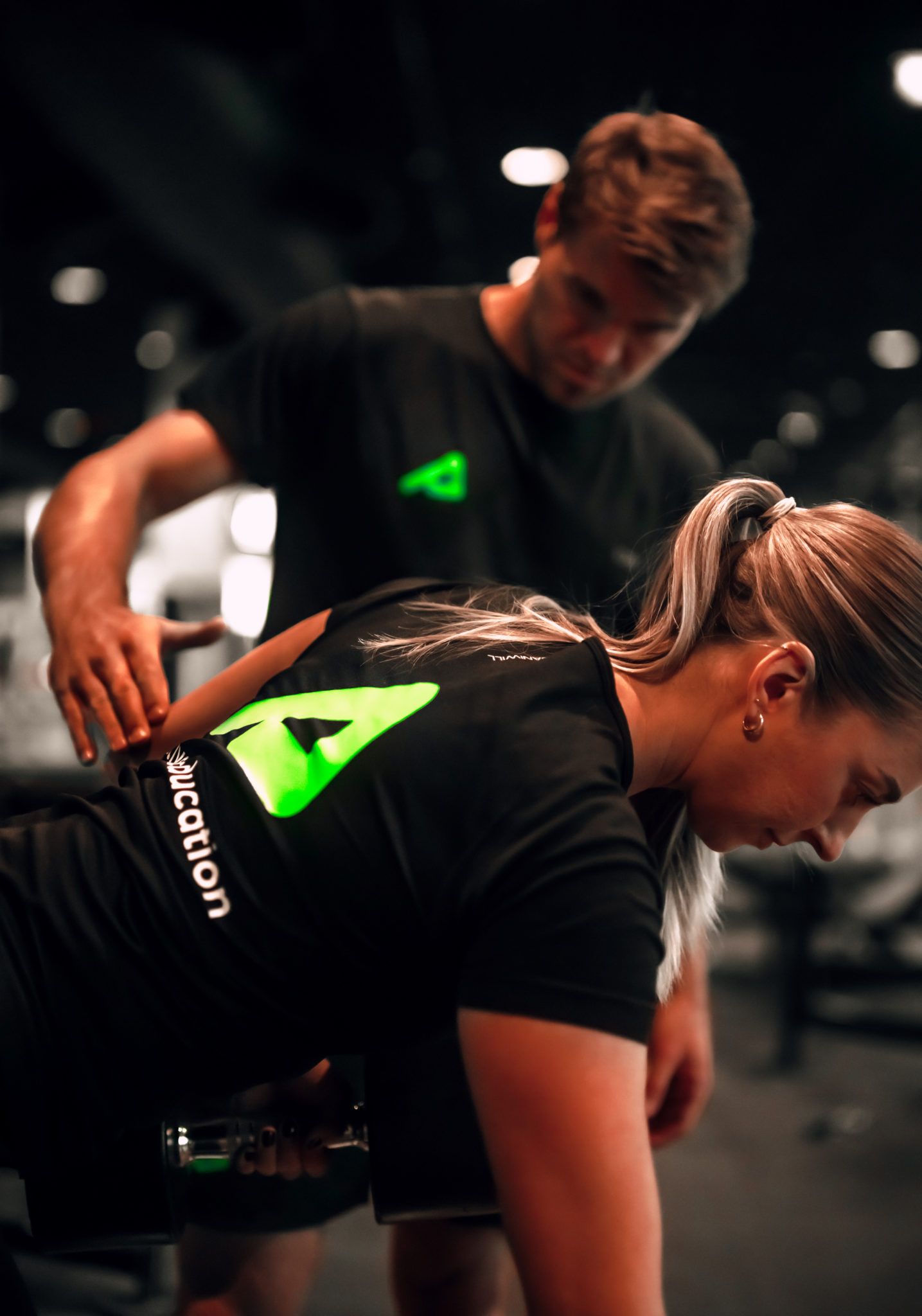
This is why personal training is not just about writing the most impressive programme on paper.
It is about matching the programme to the person.
How many days can they train?
What do they enjoy?
What equipment do they have?
How much recovery do they need?
What is the most important goal right now?
When those questions are answered, the split usually becomes much easier to choose.
It just has to work.
That means it has to fit the individual, be easy to follow and provide enough training volume to create progress.
And very often, the split that works best is simply the one the client can repeat long enough for the body to adapt.