We plan training load. We plan exercises, sets, repetitions and progression.
But do we plan sleep well enough?
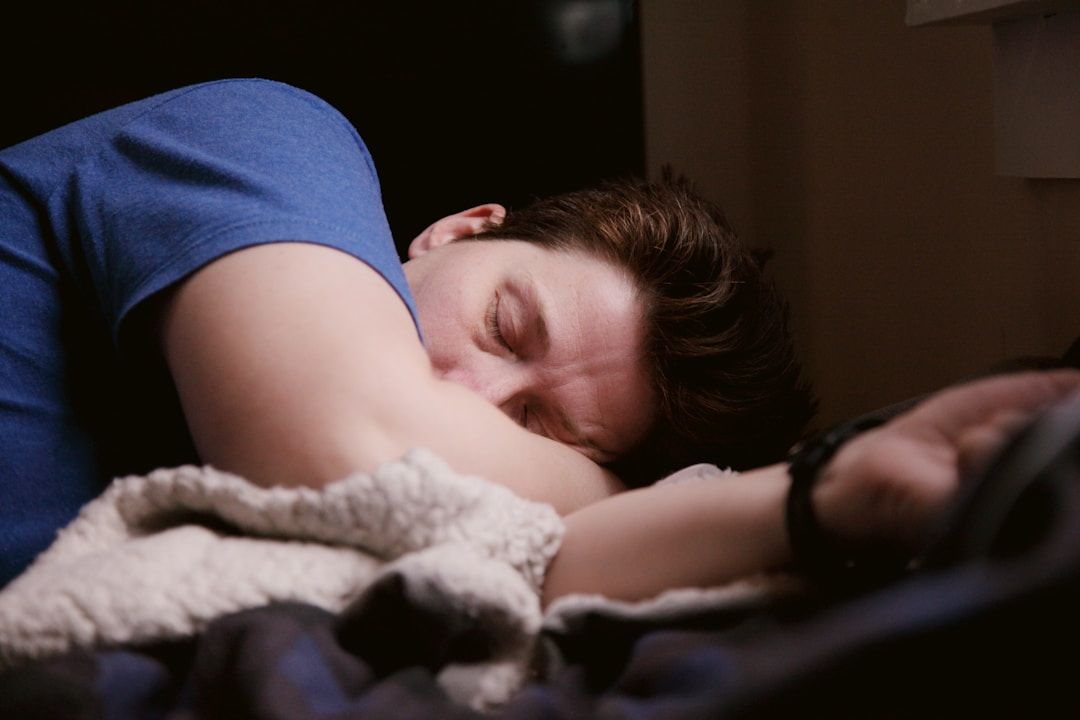
Sleep is one of the most underrated performance tools in training. This isn't exactly something new, but people do tend to underestimate just how much it matters.
The consequences can be bigger than many realise.
In one study (Nedeltcheva et al., 2010) people in a calorie deficit who slept only 5.5 hours lost significantly less fat and more muscle mass compared to those who slept 8.5 hours.
That is a brutal reminder that weight loss and fat loss are not the same thing. If you care about body composition, you should put as much effort in your sleep as you do in your workouts.
Sleep also affects the brain. Research has shown that activity in the amygdala (Yoo et al., 2007.), one of the brain's emotional centres, can increase noticeably during sleep deprivation. In everyday language: you become more reactive, more stress-sensitive and more driven by emotion.
That matters for training too. A tired client is not just tired. They may struggle more with motivation, making healthy food choices, patience and the ability to handle setbacks.
Sleep also appears to affect immune function. People who sleep less than six hours per night have been shown to have a higher risk of catching a cold compared to those who sleep more than seven hours (Prather et al., 2015; Cohen et al., 2009).
Then there is injury risk. Among young athletes, sleeping less than eight hours per night has been associated with a significantly higher risk of injury than sleeping more than eight hours (Milewski et al., 2014). And hey, let’s be honest: it is not exactly like injuries become less common as we get older.
It is difficult to build progress when the body is constantly under-recovered.
Maybe this is why recovery has become such a big part of the fitness industry. Wearables, HRV, sleep tracking, cold exposure, recovery studios and biological health are no longer just things we associate with elite athletes. They are now marketed to regular people who simply want to train better, feel better and understand their bodies a little more.
In many ways, that is a good thing.
But there is also a small trap here.
Recovery can easily become another performance arena. Another score to chase. Another thing to optimise. Suddenly, the thing that was supposed to help us feel less stressed becomes one more thing to worry about.
And most of us have probably been there. Checking the sleep score. Comparing the HRV. Wondering why we feel fine when the watch says we should feel terrible.
A watch can give useful feedback. But it should not decide how you feel about yourself.
But don’t panic. Improving sleep does not have to mean building a perfect 12-step evening routine.
The basics usually matter more than the tiny details. Go to bed and wake up at roughly the same time. Get daylight early in the day. Dim the lights a bit in the evening. And maybe don’t have a double espresso right before bed and blame your Garmin for the bad sleep score.
The bedroom environment matters too. Dark, quiet and cool usually beats expensive recovery gadgets.
The goal is not to optimise every minute of your evening. The goal is to remove the most obvious things that make good sleep harder.
And if you are into the more “biohacking” side of recovery, you might like this one: in one study on athletes, eating two kiwis before bed for four weeks was associated with better sleep duration and quality (Doherty et al., 2023).
Is that a miracle cure? No. But it is a good example of how small routines can sometimes support recovery.
The takeaway is quite simple: if you put effort into your training programme, your workouts and your meals, sleep deserves the same level of attention.